
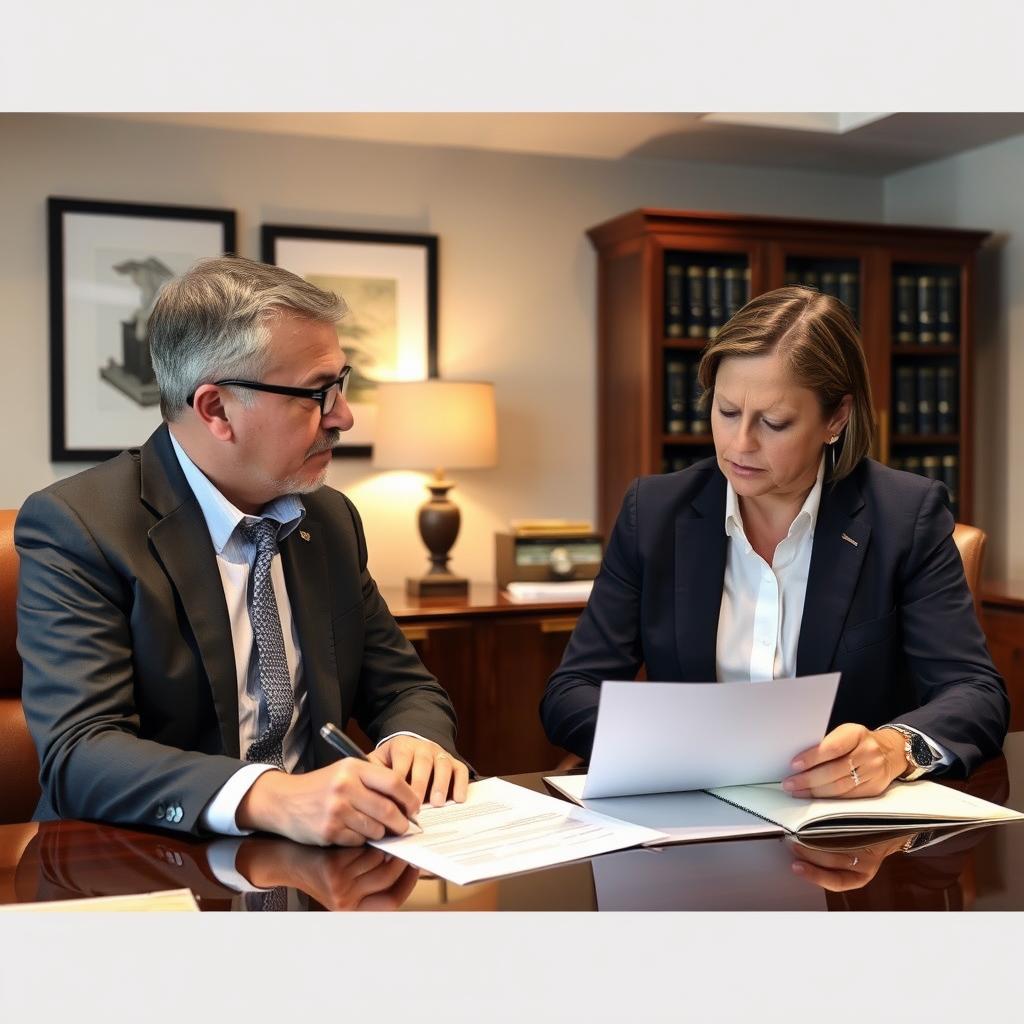
Prenuptial Agreement Lawyer Manassas, VA
Planning a marriage involves more than a ceremony—it can also include protecting your assets and clarifying financial expectations through a prenuptial agreement. In Manassas and throughout Prince William County, Virginia’s Premarital Agreement Act (Va. Code § 20‑147 et seq.) governs what terms a couple may include and how courts will review an agreement if it is ever challenged. Mr. Sris, Owner and Founder of Law Offices Of SRIS, P.C., and his Of Counsel team work with individuals in Manassas to prepare agreements that reflect their intentions and withstand judicial scrutiny. Whether you own a business, have children from a prior relationship, or want to define property rights before marriage, a carefully drafted prenuptial agreement can offer stability. The firm serves Manassas clients from its Fairfax location, handling matters that may eventually involve the Manassas Circuit Court or, for related custody and support issues, the Manassas Juvenile and Domestic Relations District Court. For a consultation, call (888) 437‑7747. Law Offices Of SRIS, P.C. – Advocacy Without Borders.
What a Prenuptial Agreement Means in Manassas
A prenuptial agreement in Manassas is a written contract between two people who plan to marry. It sets out how their assets, debts, income, and other financial interests will be treated during the marriage and—most often—if the marriage ends. Under the Virginia Premarital Agreement Act, such contracts may also address spousal support, the disposition of property upon death, and the rights and responsibilities each party will have during the marriage. The agreement takes effect only upon the marriage taking place.
Manassas couples who enter into a prenuptial agreement often have identifiable assets they wish to protect, including a home, retirement accounts, or a family business. The Manassas City and Manassas Park courts—specifically the Thirty‑first Judicial District Circuit Court—would be the forum for any divorce-related proceeding in which the agreement is contested. Virginia is an equitable distribution state, meaning a judge divides marital property fairly but not necessarily equally. A valid prenuptial agreement can override the default statutory distribution scheme and ensure that assets the parties intended to keep separate remain separate.
To be enforceable, a prenuptial agreement must be in writing, signed by both parties, and entered into voluntarily after a full and fair disclosure of each party’s financial circumstances. A Manassas court will also consider whether the agreement was unconscionable at the time it was executed and whether the party challenging it received a reasonable disclosure of the other’s finances. Working with an attorney who understands how the local bench applies these standards is critical.
How Mr. Sris and His Of Counsel Handle Prenuptial Agreement Cases
Every prenuptial agreement begins with a thorough conversation. Mr. Sris and his Of Counsel team meet with a client to understand the client’s financial picture, family dynamics, and long‑term goals. The firm then drafts an agreement that reflects those objectives, while also complying with Virginia law so the agreement will hold up if later questioned. The drafting process includes identifying all assets and debts, discussing what income and appreciation should remain separate, and walking through the specific language the Virginia courts require.
Because every couple’s situation is different, the firm tailors each agreement. For a Manassas business owner, for example, the agreement might include valuation methodology and a clear declaration that the business remains separate property. For a client entering a second marriage, the agreement might define inheritance rights for children from a previous relationship. The firm also works with the other party’s counsel—Virginia law strongly recommends that each party have independent legal representation—to negotiate terms and avoid later claims of coercion or inadequate disclosure. If a dispute arises after marriage and the agreement is challenged, Mr. Sris and his Of Counsel are prepared to advocate for its enforcement in court.
About Mr. Sris and His Of Counsel Team
Mr. Sris, Owner and Founder of Law Offices Of SRIS, P.C., has practiced law since 1997 and is admitted in Virginia, Maryland, the District of Columbia, New Jersey, and New York. A former prosecutor, he brings a sharply analytical approach to family law matters, ensuring that every prenuptial agreement he drafts is built to survive litigation. Mr. Sris testified before the Virginia House Courts of Justice Committee in support of 2019 HB 635 (chief patron Del. David Bulova). His understanding of statutory construction and legislative intent informs his prenuptial agreement work, helping him anticipate how a Virginia judge will interpret a contract provision.
The Of Counsel team that supports Mr. Sris includes attorneys with backgrounds in complex litigation, family law, and business matters. Together they bring a depth of experience to prenuptial agreement cases in Manassas, from straightforward agreements between young couples to multi‑layered contracts involving significant assets and international elements. Mr. Sris and his Of Counsel serve Manassas clients from the firm’s Fairfax location and appear regularly in the Manassas Circuit Court.
Frequently Asked Questions
What exactly is a prenuptial agreement in Virginia?
A prenuptial agreement is a written contract signed before marriage that decides how assets, debts, and spousal support will be handled if the marriage ends. Under the Virginia Premarital Agreement Act, the agreement can also address property division at death and other financial rights during the marriage. The contract takes effect only after the wedding. Manassas couples use these agreements to protect separate property, define what is marital, and avoid litigation later.
Do I need a lawyer to create a prenuptial agreement in Manassas?
While Virginia law does not mandate a lawyer, having independent legal counsel for each party substantially reduces the risk that a court will later find the agreement invalid. A lawyer ensures the agreement meets statutory requirements, that disclosure is sufficient, and that the terms are not unconscionable. Without an attorney, one party might later claim they did not understand their rights. Working with an experienced prenuptial agreement lawyer helps protect both parties and the enforceability of the contract.
Can a prenuptial agreement be challenged in Virginia?
Yes, a prenuptial agreement can be challenged in Virginia if it was signed involuntarily, if it was unconscionable when made, or if a party did not receive fair and reasonable financial disclosure. A Manassas Circuit Court judge will examine the circumstances at the time of signing. To avoid a successful challenge, both parties should fully disclose assets and debts, have adequate time to review the agreement, and ideally each obtain independent legal advice. Mr. Sris and his Of Counsel draft agreements with these enforceability factors in mind.
What does a Manassas prenuptial agreement lawyer do?
A prenuptial agreement lawyer in Manassas counsels the client on Virginia law, drafts a contract that reflects the client’s wishes, and negotiates with the other party’s attorney to reach mutually acceptable terms. The lawyer also analyzes whether specific assets—such as a closely held business or future retirement benefits—are vulnerable under equitable distribution and structures the agreement to shield them. If a dispute later arises, the same lawyer can seek to enforce the agreement in the Manassas Circuit Court. The process combines careful planning with precise drafting.
How much does a prenuptial agreement cost?
The cost of a prenuptial agreement varies depending on the complexity of the couple’s assets and whether negotiations are needed. A fairly straightforward agreement with full cooperation between the parties may be more affordable, while an agreement involving business valuations, multiple properties, or significant disagreement can require more attorney time. There is no flat fee set by law. Contact Law Offices Of SRIS, P.C. at (888) 437‑7747 to discuss your circumstances and obtain an estimate tailored to your situation.
What should I bring to a consultation about a prenuptial agreement?
Bring a list of your assets and debts, recent statements for bank and investment accounts, real property deeds, and any business ownership documents. Also bring income information, retirement account summaries, and a clear picture of what you want to protect. If you have children from a prior relationship, bring any existing estate planning documents. Having this information organized allows the attorney to quickly assess what provisions are appropriate and draft an agreement that accurately reflects your finances.
Does Virginia law require full financial disclosure in a prenuptial agreement?
Yes, Virginia law requires a fair and reasonable disclosure of each party’s property and financial obligations. A complete and honest exchange of financial information is the foundation of an enforceable agreement. If one party conceals significant assets or debts, the agreement can be set aside. The disclosure does not have to be exhaustive to the penny, but it must be sufficient for the other party to understand the financial landscape. Mr. Sris and his Of Counsel guide clients through the disclosure process to avoid later claims of fraud or material omission.
What is the difference between a prenuptial and a postnuptial agreement in Virginia?
A prenuptial agreement is signed before marriage, while a postnuptial agreement is signed after the wedding. Both are governed by Virginia’s Premarital Agreement Act, though courts scrutinize postnuptial agreements somewhat more carefully because the parties already have marital duties. A prenuptial agreement allows a couple to set expectations before entering the marriage; a postnuptial agreement can address new circumstances—such as an inheritance or the start of a business—that arise later. In either case, the same formalities of writing, signatures, and disclosure apply.
Can a prenuptial agreement address spousal support in Virginia?
Yes, a prenuptial agreement in Virginia may limit or waive spousal support, provided the provision is not unconscionable at the time of enforcement. A court will still review whether enforcing a spousal support waiver would leave a spouse unable to meet basic needs. The agreement can also set a specific amount or formula instead of a complete waiver. Because spousal support is often a sensitive topic, it is essential that both parties understand the long‑term implications of any waiver or limitation before signing.
Are prenuptial agreements generally enforceable in Virginia?
Yes, a properly executed prenuptial agreement is generally enforceable in Virginia, but certain defenses—such as involuntariness, unconscionability, or inadequate disclosure—can invalidate it. Virginia courts start with a presumption favoring the agreement’s validity when it is in writing, signed, and entered into voluntarily. To maximize enforceability, both parties should have independent counsel, avoid signing under pressure, and fully disclose assets. Mr. Sris and his Of Counsel structure agreements from the beginning to withstand the scrutiny a Manassas judge would apply.
For guidance on your specific situation, reach Law Offices Of SRIS, P.C. at (888) 437‑7747.
Explore family law assistance in nearby localities:
Fairfax County family law attorney |
Fairfax City family law attorney |
Falls Church family law attorney |
Prince William County family law attorney |
Manassas Park family law attorney
Virginia statutes and court resources:
Virginia Code Title 20 – Domestic Relations |
Virginia Circuit Courts |
Virginia Judicial System
Attorney advertising. Prior results do not guarantee a similar outcome. Results may vary.
Case results depend on a variety of factors unique to each case.