
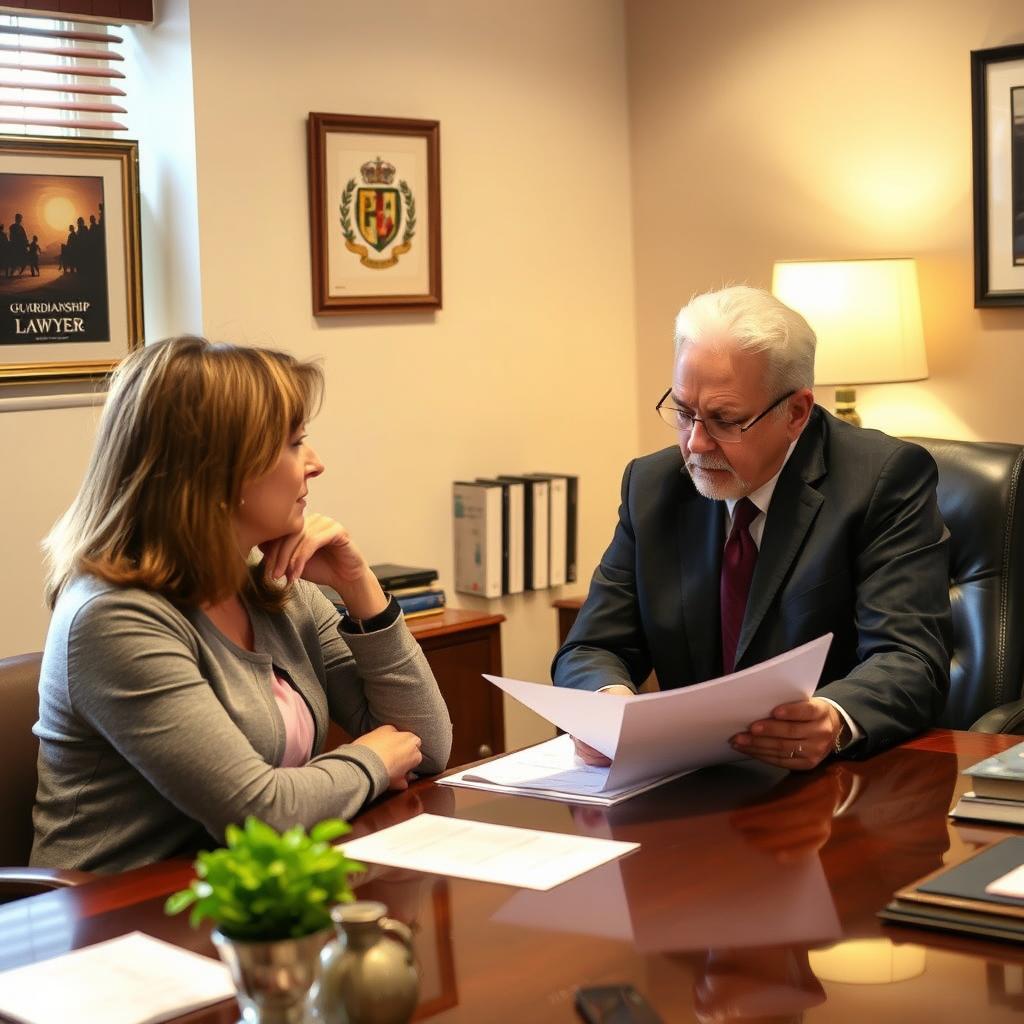
Guardianship Lawyer Arlington County, VA
When a family member can no longer manage their own personal or financial affairs—whether due to a minor child’s need for a stable caregiver, the onset of age-related cognitive decline, or an unexpected medical crisis—the legal mechanism of guardianship provides a framework for protection. In Arlington County, Virginia, guardianship proceedings are governed by Va. Code § 64.2-2000 et seq., and they unfold in either the Arlington County Juvenile and Domestic Relations District Court (for minors) or the Arlington County Circuit Court (for adults). Mr. Sris and his Of Counsel at Law Offices Of SRIS, P.C. have represented clients in guardianship matters throughout Northern Virginia since 1997. They guide families through the petition process, court hearings, and the ongoing reporting obligations that follow the appointment. Whether you are seeking to become a guardian for a child whose parents are unable to care for them, or you need to establish a conservatorship to manage an incapacitated adult’s estate, our Arlington location can assist. Reach our firm at (888) 437-7747 to schedule a consultation. Law Offices Of SRIS, P.C. – Advocacy Without Borders.
What Guardianship Means in Arlington County, Virginia
In Virginia, a guardianship is a court-ordered relationship in which a person (the guardian) is appointed to make personal decisions for someone who cannot do so independently. The need arises most commonly in two situations: a minor child whose parents have died or are unavailable, and an adult who has lost the capacity to manage their own affairs because of illness, injury, or advanced age. The same statutory chapter—Title 64.2 of the Virginia Code—governs both scenarios, but the procedural details differ based on whether the petition is filed on behalf of a child or an adult.
In Arlington County, a guardianship petition for a minor is typically heard by the Juvenile and Domestic Relations (J&DR) District Court. The court examines the child’s circumstances, the fitness of the proposed guardian, and, above all, the best interests of the child. For an incapacitated adult, the case proceeds in the Arlington County Circuit Court, which must determine that the respondent truly lacks decisional capacity before issuing letters of guardianship. The court may also appoint a conservator—sometimes the same person—to manage the adult’s financial assets. The distinction between a guardian (who handles personal and health-related decisions) and a conservator (who handles property) is central to Virginia practice, and many families choose to petition for both roles simultaneously.
Local practice in Arlington County requires thorough documentation: medical reports for adult incapacity, background checks for the proposed guardian, and often the involvement of a guardian ad litem who represents the interests of the alleged incapacitated person or child. Hearings are conducted on the court’s calendar, and the decision rests on the judge’s assessment of the evidence presented. Having an experienced attorney to prepare the petition and navigate the evidentiary requirements helps families present a clear case and address any concerns the court may raise.
How Mr. Sris and His Of Counsel Handle Guardianship Cases
Mr. Sris and his Of Counsel approach each guardianship matter with an understanding that the proceeding is both legally complex and emotionally charged. They begin by meeting with the family to understand the specific situation—whether it is an urgent need for a temporary guardian, a long-term plan for an aging parent, or a custody-adjacent guardianship for a child. Based on that initial review, they identify the appropriate court, gather the necessary supporting documentation, and draft the petition in compliance with Virginia statutory requirements.
Once the petition is filed, the firm represents the client at all hearings. For an adult guardianship, this includes presenting the medical evidence and, where needed, working with the court-appointed guardian ad litem to ensure the respondent’s rights are protected while also advocating for the client’s role as guardian or conservator. For a minor guardianship, the process often involves coordination with child welfare professionals and family members. If a contested guardianship arises—for example, when another relative objects to the appointment—Mr. Sris and his Of Counsel have the litigation background to advocate forcefully while keeping the focus on the protected person’s well-being. Throughout each case, they maintain communication with the client, explain each step, and handle the post-appointment reporting obligations that Virginia law imposes on guardians and conservators.
About Mr. Sris and His Of Counsel Team
Mr. Sris, Owner and Founder of Law Offices Of SRIS, P.C., founded the firm in 1997. As a former prosecutor, he brings to his civil practice a thorough understanding of courtroom dynamics and the importance of thorough case preparation. Mr. Sris testified before the Virginia House Courts of Justice Committee in support of 2019 HB 635 (chief patron Del. David Bulova). He is admitted in Virginia, Maryland, the District of Columbia, New Jersey, and New York.
Mr. Sris and his Of Counsel bring over 120 years of combined legal experience to guardianship cases, with 4,739+ documented firm-wide results. Results may vary. The collective team handles all aspects of family law, ensuring that clients in Arlington County and throughout Northern Virginia receive the benefit of extensive collective experience in proceedings before local courts.
Frequently Asked Questions
What is guardianship in Virginia?
Guardianship is a court-supervised legal arrangement in which a qualified person is given authority to make personal and health-related decisions for someone who is unable to do so. In Virginia, the law distinguishes between a guardian of the person (for personal matters) and a conservator of the estate (for financial matters). The process is governed by Va. Code § 64.2-2000 et seq. And may involve a minor child, an incapacitated adult, or both. The court must find that the appointment is in the trusted interest of the protected person, and it imposes ongoing reporting duties on the appointed guardian.
Who can be appointed as a guardian in Arlington County?
The court will appoint a person who demonstrates the ability to act in the best interests of the protected individual and who meets Virginia’s statutory qualifications. In many cases, a family member—such as a parent seeking guardianship of a child, or an adult child seeking to care for an aging parent—files the petition. The proposed guardian must be a suitable adult, typically at least 18 years of age, and must pass a background check. The Arlington County court reviews the suitability of the nominee based on evidence presented at a hearing.
How is a guardianship case initiated in Virginia?
A guardianship begins when the prospective guardian files a petition in the appropriate Virginia court, along with supporting evidence that demonstrates the need for the appointment. For an adult guardianship in Arlington County, the petition is filed in the Circuit Court, accompanied by medical reports or other proof of incapacity. For a minor, the case starts in the Juvenile and Domestic Relations District Court. Notice must be given to the respondent and any interested parties. The court then sets a hearing, which is typically the central event in the process.
What is the difference between a guardian and a conservator?
A guardian makes personal decisions for the protected person, while a conservator handles financial matters and property. Under Virginia law, the roles can be filled by the same person or by different individuals. The guardian oversees healthcare, residential arrangements, and day-to-day well-being. The conservator is responsible for managing the person’s assets, paying bills, and providing an accounting to the court. When both appointments are needed, the family may petition for both in the same proceeding.
Can I object to a guardianship petition in Arlington County?
Yes, an interested party—such as a family member or the proposed protectee—may object to the guardianship by filing a response and presenting evidence at the hearing. The court will hear all sides, and the judge decides whether the legal requirements for guardianship have been met. If there is a dispute, the proceeding becomes contested. In such cases, having an attorney is especially important to protect your rights and present your position effectively within the procedural rules of the Arlington County circuit or juvenile court.
How long does a guardianship case take in Arlington County?
The timeline for a guardianship case in Arlington County depends on the complexity of the matter and the court’s scheduling. An uncontested petition may be resolved after a single hearing, while a contested case can take longer because of additional discovery, expert evaluations, or multiple court dates. The court sets its own calendar; counsel can provide an estimate based on the specific facts once they have reviewed the circumstances.
Do I need a lawyer for a guardianship matter?
Virginia law does not require you to hire a lawyer to file a guardianship petition, but legal guidance makes the process more manageable and helps ensure that all procedural requirements are met. The petition must be drafted correctly, the evidence must be sufficient, and the hearing requires advocacy. An attorney can also advise on alternatives to guardianship—such as powers of attorney or supported decision-making agreements—that may achieve your goals without a full court proceeding. For a consultation, reach Mr. Sris and his Of Counsel at (888) 437-7747.
What is an emergency guardianship?
An emergency guardianship is a temporary appointment made by the court when an immediate risk of harm exists and there is no time to go through the regular process. In Virginia, a petitioner can request emergency relief if, for example, a person’s health or safety is in imminent danger and no other decision-maker is available. The court may issue a short-term order, often pending a full hearing. The burden of proof is high, and the appointment is limited in scope and duration.
What happens if the incapacitated person regains capacity?
If the protected person’s condition improves and they regain the ability to make decisions, the guardianship can be modified or terminated by returning to court. A motion to restore rights must be supported by medical evidence showing that the incapacity no longer exists. The same court that established the guardianship has authority to review the situation and, if appropriate, restore the individual’s legal rights. Annual reports to the commissioner of accounts help the court monitor whether the guardianship remains necessary.
How can I find a guardianship lawyer near Arlington, VA?
You can find a guardianship lawyer in Arlington by contacting a firm with experience in Virginia family law and a physical location in the Northern Virginia area. Law Offices Of SRIS, P.C. maintains an Arlington location at 1655 Fort Myer Dr, Suite 700, Room 719, Arlington, VA 22209, and can be reached at (888) 437-7747 or directly at (703) 589-9250. In-person meetings are by appointment. The firm’s attorneys are familiar with the Arlington County courts and can walk you through the steps from initial consultation to final order.
For additional family law resources in the region, see our pages on Fairfax County family law, Prince William County family law, Loudoun County family law, and Stafford County family law.
For official Virginia guardianship law, see Virginia Code Title 64.2 (Wills, Trusts, and Fiduciaries). For local court information, visit Arlington County Circuit Court and Arlington County Juvenile and Domestic Relations District Court.
Attorney advertising. Prior results do not guarantee a similar outcome. Case results depend on a variety of factors unique to each case. Results may vary.