
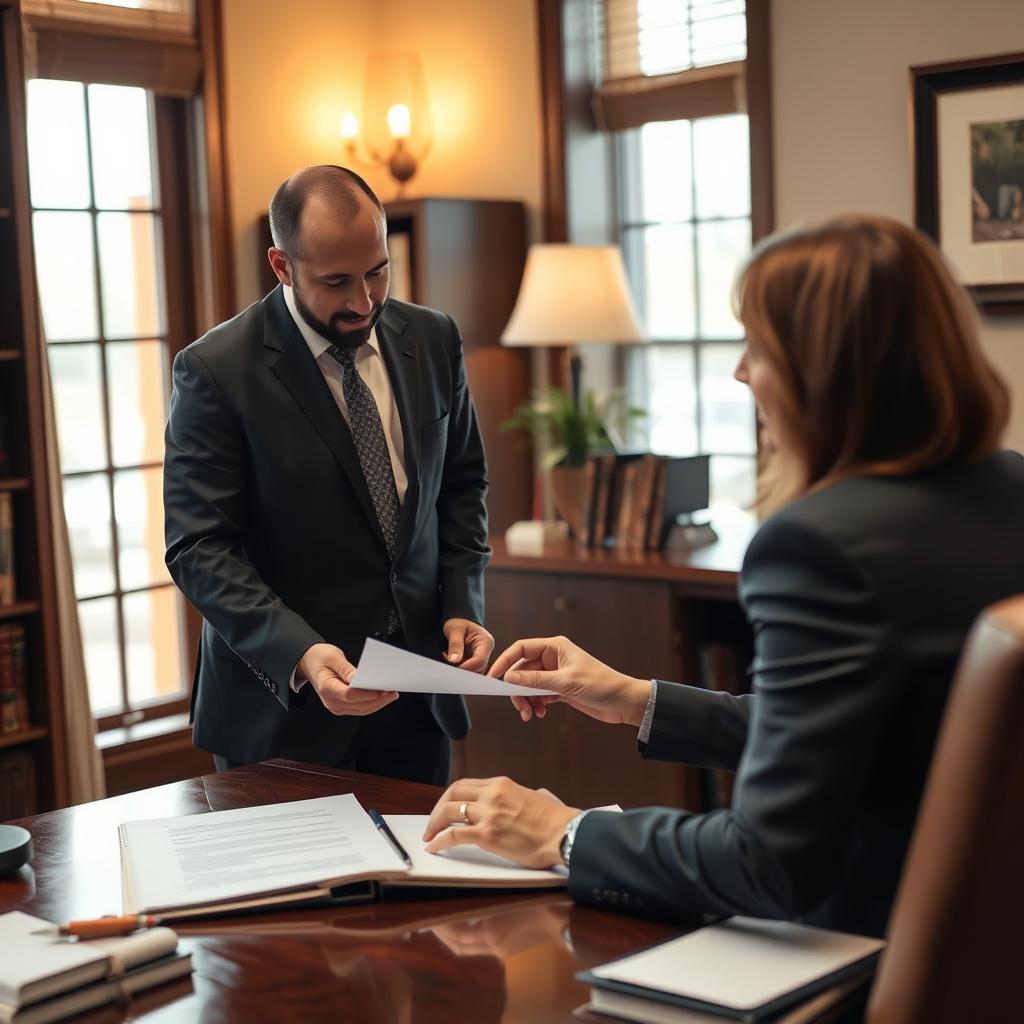
Marital Agreement Lawyer Fairfax County, VA
For individuals and families in Fairfax County, marital agreements—including prenuptial and postnuptial agreements—offer a way to define property rights and financial obligations outside Virginia’s default equitable distribution framework. Whether you are entering a marriage with substantial separate assets, own a business, or simply seek clarity about financial expectations, a well-drafted marital agreement can reduce conflict and uncertainty. Virginia law, particularly the Premarital Agreement Act (Va. Code § 20‑147 et seq.), governs these agreements and sets forth specific requirements for enforceability. The courts of Fairfax County—the Circuit Court for divorce and property matters and the Juvenile and Domestic Relations District Court for support and custody—regularly consider marital agreements as part of broader family law proceedings. Mr. Sris and his Of Counsel at Law Offices Of SRIS, P.C. bring extensive combined legal experience to marital agreement matters. Results may vary. For a consultation about your marital agreement needs in Fairfax County, reach our firm at (888) 437‑7747. Law Offices Of SRIS, P.C. – Advocacy Without Borders.
What Marital Agreements Mean in Fairfax County
In Fairfax County, a marital agreement is a written contract between spouses or prospective spouses that addresses property division, spousal support, and other financial issues in the event of divorce or separation. Because Virginia is an equitable distribution state—not a community property state—the default rule is that marital property is divided fairly but not necessarily equally. A marital agreement allows the parties to override that default and instead apply their own terms, provided those terms are not unconscionable and the agreement meets statutory requirements.
The Fairfax County Circuit Court, located in the Nineteenth Judicial District, has exclusive original jurisdiction over divorce and equitable distribution. If a marital agreement is challenged during a divorce, the Circuit Court will evaluate its validity under the Premarital Agreement Act. Factors the court may consider include whether the agreement was entered into voluntarily, whether there was full financial disclosure, and whether enforcement would be inequitable. Because the Fairfax County courts handle a high volume of family law cases involving complex financial portfolios—including government pensions, stock options, and real estate—local practitioners must be familiar with both the statutory framework and how the Circuit Court applies it. Mr. Sris and his Of Counsel assist clients in drafting agreements that aim to withstand judicial scrutiny in this locality, drawing on their understanding of how Fairfax County judges have historically approached marital agreement disputes.
How Mr. Sris and His Of Counsel Handle Marital Agreement Cases
When a client seeks a prenuptial or postnuptial agreement, the process begins with a thorough discussion of the client’s goals, assets, and family circumstances. Mr. Sris and his Of Counsel explain how Virginia law treats separate and marital property, what terms can and cannot be included, and the likely consequences of the proposed agreement in a Fairfax County court. The team works to ensure that the agreement reflects the client’s intentions while satisfying the procedural safeguards that Virginia courts require—such as full and fair disclosure of assets and obligations.
If a marital agreement is later challenged, Mr. Sris and his Of Counsel represent clients in contested hearings before the Fairfax County Circuit Court. This may involve presenting evidence about the negotiation process, financial disclosures, and the parties’ understanding at the time of signing. Because Virginia does not require a mandatory waiting period or independent legal representation for every marital agreement, challenges often turn on fact-intensive inquiries about voluntariness and the presence of duress or overreaching. Mr. Sris and his Of Counsel build a record to address these inquiries, using their experience in local court procedure to position the case for a favorable resolution. Throughout, they remain accessible to answer client questions and adjust strategy as the matter develops.
About Mr. Sris and His Of Counsel Team
Mr. Sris, Owner and Founder of Law Offices Of SRIS, P.C., has practiced family law since founding the firm in 1997. He is admitted in Virginia, Maryland, the District of Columbia, New Jersey, and New York, and maintains a multi‑state practice that includes substantial work in Fairfax County. As a former prosecutor, he brings an analytical approach to marital agreement drafting and litigation, identifying potential weaknesses in an agreement and addressing them before they become grounds for a challenge. Mr. Sris testified before the Virginia House Courts of Justice Committee in support of 2019 HB 635 (chief patron Del. David Bulova), demonstrating his engagement with the legislative evolution of family law in the Commonwealth.
Working alongside Mr. Sris, his Of Counsel team contributes additional depth in family law, criminal defense, and civil litigation. Each Of Counsel attorney brings a distinct background—ranging from former Maryland prosecution experience to prior service as a Virginia State Trooper—that enriches the firm’s ability to handle marital agreement cases where other legal issues, such as allegations of fraud or concealment of assets, may arise. Together, Mr. Sris and his Of Counsel provide clients in Fairfax County with practical, detail‑oriented representation aimed at achieving durable marital agreements. For a consultation, reach our firm at (888) 437‑7747.
Frequently Asked Questions
What is a premarital agreement (prenup) in Virginia?
A premarital agreement in Virginia is a contract made before marriage that determines how property, debts, and spousal support will be handled if the marriage ends in divorce or death. Under the Virginia Premarital Agreement Act (Va. Code § 20‑147 et seq.), such agreements can override the default equitable distribution rules and allow couples to define their own financial arrangements. To be enforceable, the agreement must be in writing, signed by both parties, and entered into voluntarily with full financial disclosure. A prenup cannot adversely affect child support obligations. For guidance on drafting an agreement that meets Fairfax County standards, reach Law Offices Of SRIS, P.C. at (888) 437‑7747.
Are prenuptial agreements enforceable in Fairfax County?
Yes, prenuptial agreements are enforceable in Fairfax County if they satisfy the requirements of Virginia’s Premarital Agreement Act. The Fairfax County Circuit Court will enforce a prenup unless it finds that the agreement was involuntary, was unconscionable when executed, or that one party did not receive fair and reasonable disclosure of the other’s financial circumstances. The court examines the circumstances surrounding the negotiation and signing, including whether each party had the opportunity to consult independent legal counsel. Because Fairfax County courts see many high‑asset divorces, local judges are familiar with the nuances of marital agreement enforcement. To discuss the details of your agreement, contact Law Offices Of SRIS, P.C. at (888) 437‑7747.
What can a marital agreement cover under Virginia law?
A marital agreement in Virginia can cover the classification and division of property, spousal support obligations, management of assets during marriage, and death‑benefit rights. Parties may also agree on the disposition of the marital residence, retirement accounts, business interests, and other financial matters. However, the agreement cannot predetermine child custody or child support, as those issues are always subject to court review based on the best interests of the child. India is not a signatory to the 1980 Hague Convention on Civil Aspects of International Child Abduction. The scope of permissible terms is broad, but the agreement must not violate public policy. Mr. Sris and his Of Counsel help clients identify which provisions are appropriate for their specific situation under Virginia law.
Do I need a lawyer to create a marital agreement in Virginia?
Virginia law does not require you to hire a lawyer to create a marital agreement, but because these agreements affect substantial property and spousal support rights, having experienced legal guidance is strongly advisable. A lawyer can ensure the agreement meets the statutory formalities and addresses vulnerabilities that could lead to a successful challenge later. Each party may benefit from independent legal counsel, though not always required, to strengthen the agreement’s enforceability. In Fairfax County, where the Circuit Court handles high‑value marital estates, an agreement that was prepared without careful attention to detail is more vulnerable. For a consultation about your marital agreement, call (888) 437‑7747.
Can a postnuptial agreement be challenged in Virginia?
Yes, a postnuptial agreement—entered into after marriage—can be challenged in Virginia on grounds similar to those for prenuptial agreements, such as involuntariness, unconscionability, or failure to disclose assets. Because postnuptial agreements are signed during an existing marriage, courts may scrutinize them more closely for signs of duress or overreaching. The Fairfax County Circuit Court evaluates each challenge individually, looking at the totality of circumstances. Having an agreement that was negotiated fairly and documented thoroughly can reduce the risk of a successful challenge. To discuss how your postnuptial agreement might fare under Virginia law, reach Law Offices Of SRIS, P.C. at (888) 437‑7747.
How does equitable distribution interact with a marital agreement in Fairfax County?
If a valid marital agreement exists, the Fairfax County Circuit Court will generally enforce its terms rather than applying the default equitable distribution factors under Va. Code § 20‑107.3. The agreement replaces the court’s usual duty to classify and divide marital property unless the agreement is set aside. If no agreement governs, the court classifies property as separate or marital and distributes it fairly but not necessarily equally based on statutory factors. A well‑drafted marital agreement can provide certainty and avoid the unpredictability of equitable distribution litigation. For guidance on how your agreement may be treated in Fairfax County, contact us at (888) 437‑7747.
Attorney advertising. Prior results do not guarantee a similar outcome.
Case results depend on a variety of factors unique to each case.