
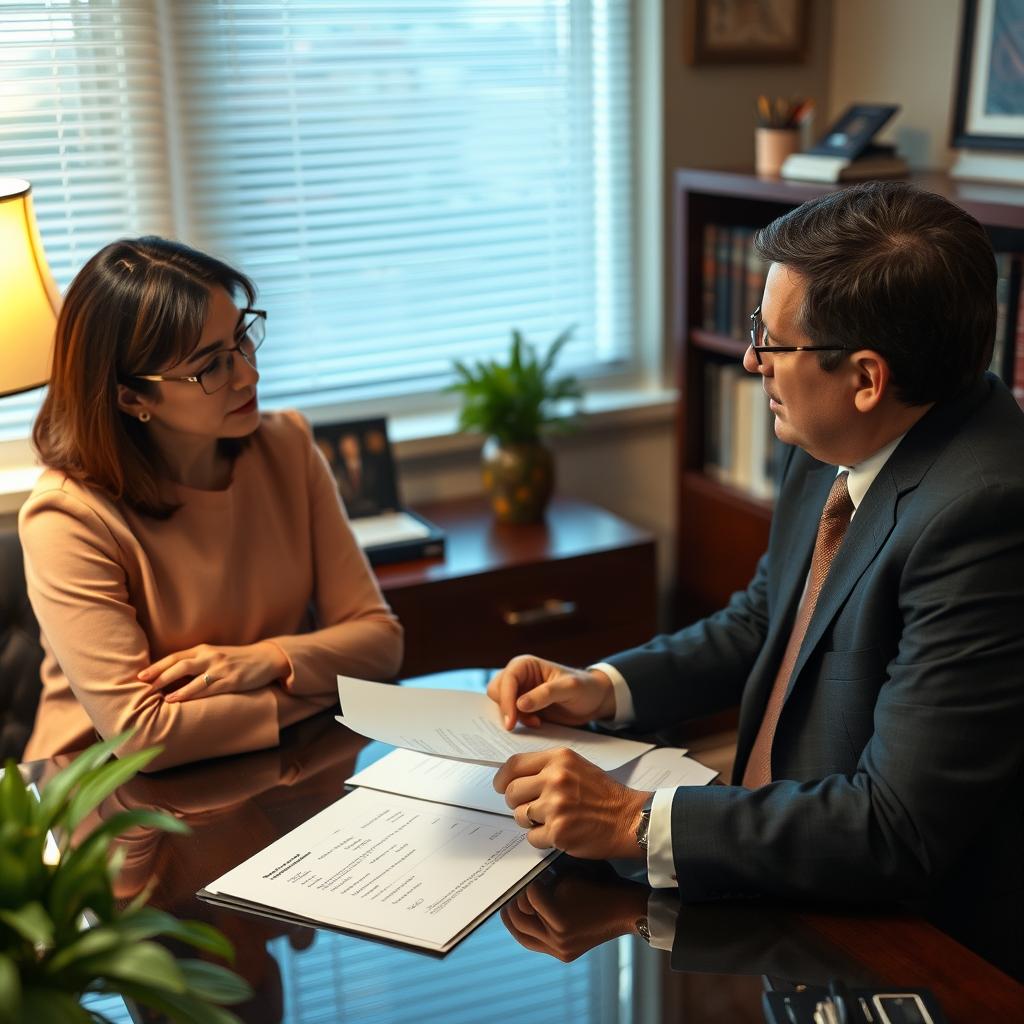
Marital Property Lawyer Falls Church, VA
When a marriage ends in Falls Church, Virginia, dividing marital property requires careful application of Virginia’s equitable distribution law under Va. Code § 20-107.3. Falls Church Circuit Court at 300 Park Avenue, Suite 151W handles divorce and property division matters, while the Falls Church Juvenile and Domestic Relations District Court addresses custody and support. Marital property includes assets acquired during the marriage—real estate, retirement accounts, business interests, and vehicles—and Virginia courts distribute them fairly, though not necessarily equally. Mr. Sris, Owner and Founder of Law Offices Of SRIS, P.C., and his Of Counsel represent clients at every stage, from classifying separate versus marital property to negotiating settlement agreements and litigating contested equitable distribution hearings. Whether a case involves straightforward assets or complex financial holdings requiring forensic analysis, the firm works to achieve a comprehensive resolution. Reach Law Offices Of SRIS, P.C. at (888) 437-7747 to schedule a consultation. Law Offices Of SRIS, P.C. – Advocacy Without Borders.
What Family Law Means in Falls Church, Virginia
Family law in Falls Church encompasses divorce, child custody, spousal support, and the division of property acquired during the marriage. Marital property division is governed by Va. Code § 20-107.3, Virginia’s equitable distribution statute. Equitable distribution is not the same as community property: the court divides marital assets fairly after considering 11 statutory factors, including monetary and non‑monetary contributions, the duration of the marriage, and the circumstances that led to the divorce. Separate property—assets owned before marriage, gifts, and inheritances—is typically excluded from division.
Proceedings involving marital property are heard in the Falls Church Circuit Court at 300 Park Avenue, Suite 151W, Falls Church, VA 22046. The court has exclusive original jurisdiction over divorce actions under Va. Code § 20-96 and resolves equitable distribution, spousal support, and related matters. The Falls Church Juvenile and Domestic Relations District Court handles standalone custody, visitation, and child support. Because Falls Church is an independent city within the Seventeenth Judicial District, the local procedural rules and docketing practices require familiarity with the specific court’s expectations. Mr. Sris and his Of Counsel appear regularly before these courts and understand the way marital property issues are presented, valued, and resolved in this locality.
How Mr. Sris and His Of Counsel Handle Family Law Cases
Mr. Sris and his Of Counsel approach matrimonial property matters by first identifying and classifying all assets. They distinguish between marital property—generally everything acquired during the marriage—and separate property, such as pre‑marital holdings or inheritances. When necessary, the team works with forensic accountants and business valuation attorneys to assess the value of business interests, retirement accounts, real estate, and other complex holdings. The goal is to build a record that accurately reflects the full financial picture for the court.
In contested divorces, counsel presents evidence on each of the 11 equitable distribution factors under Va. Code § 20-107.3. In uncontested matters, they negotiate and draft a comprehensive property settlement agreement, which resolves all asset and debt division and allows the parties to proceed on a no‑fault separation ground after meeting the applicable statutory period. Where temporary relief is needed, they file motions for pendente lite support or to preserve marital assets during the case. Throughout, clients receive direct communication about the status of their matter and the legal strategy. Mr. Sris and his Of Counsel bring extensive combined legal experience to family law cases. Results may vary.
About Mr. Sris and His Of Counsel Team
Mr. Sris, Owner and Founder of Law Offices Of SRIS, P.C., has practiced law since 1997. A former prosecutor, he brings direct courtroom experience to contested equitable distribution trials and settlement negotiations. Mr. Sris testified before the Virginia House Courts of Justice Committee in support of 2019 HB 635 (chief patron Del. David Bulova), a bill that revised the equitable distribution statute concerning retirement benefits. He is admitted in Virginia, Maryland, the District of Columbia, New Jersey, and New York.
All other attorneys at the firm serve as Of Counsel, engaged through Excella. Together, Mr. Sris and his Of Counsel bring extensive combined legal experience. The team includes attorneys with backgrounds in prosecution, law enforcement, and complex litigation, offering clients a multi‑disciplinary perspective on family law matters. Whether a case involves straightforward asset division or high‑net‑worth marital estates, the firm works toward outcomes that protect the client’s long‑term financial interests. Reach Mr. Sris and his Of Counsel at (888) 437-7747 to discuss a Falls Church marital property matter.
Frequently Asked Questions
How is marital property divided in a Virginia divorce?
Virginia courts divide marital property using equitable distribution, not a strict 50/50 split. Under Va. Code § 20-107.3, the judge considers 11 statutory factors—including the duration of the marriage, each spouse’s contributions, and the reasons for the divorce—to reach a division that is fair to both parties. Marital property includes nearly all assets accumulated during the marriage, while separate property, such as pre‑marital assets or inheritances, generally stays with the original owner. If the parties cannot agree on their own, the Falls Church Circuit Court will classify, value, and distribute the property at trial. A marital settlement agreement signed by both spouses can bypass litigation entirely. For guidance on your specific situation, reach Law Offices Of SRIS, P.C. at (888) 437-7747.
What is considered marital property under Virginia law?
Marital property generally includes all assets acquired by either spouse from the date of marriage through the date of separation. Common examples are wages, real estate, retirement accounts, business interests, vehicles, bank accounts, and debts incurred during the marriage. Even assets titled in only one spouse’s name can be marital if acquired during the marriage. Separate property—gifts, inheritances, and assets owned before marriage—is typically excluded, although any increase in value that results from marital effort may become subject to division. Proper classification is essential because a mistake can affect the entire distribution. For a consultation, reach Mr. Sris and his Of Counsel at (888) 437-7747.
Does equitable distribution mean a 50/50 split?
No, equitable distribution does not require an equal 50/50 division of marital assets. Instead, a Virginia judge weighs the 11 factors in Va. Code § 20-107.3—such as the length of the marriage, each spouse’s age and health, and their monetary and non‑monetary contributions—to reach a distribution that is fair, though not necessarily equal. A spouse who sacrificed career opportunities to support the family, for example, may receive a larger share of certain assets. In Falls Church Circuit Court, the judge has significant discretion, so presenting a well‑supported case matters. To discuss the details of your matter, contact Law Offices Of SRIS, P.C. at (888) 437-7747.
How does a prenuptial agreement affect marital property division?
A valid prenuptial agreement can override Virginia’s default equitable distribution rules by specifying how property will be divided in a divorce. Under the Virginia Premarital Agreement Act, such agreements are enforceable if they were entered into voluntarily and with full financial disclosure, and if they are not unconscionable. A prenuptial agreement can protect separate property, define what will be considered marital property, and limit or waive spousal support. However, the court will still review the agreement for fairness, especially if circumstances have changed significantly since it was signed. Having an experienced attorney review the agreement before and during divorce is advisable. For guidance on your situation, reach Law Offices Of SRIS, P.C. at (888) 437-7747.
What should I do to prepare for a marital property case in Falls Church?
Begin by gathering financial documents—tax returns, pay stubs, bank statements, retirement account statements, deeds, and business records—and listing all assets and debts you are aware of. Avoid hiding or transferring assets, as that can damage credibility and lead to court sanctions. Write down your goals and concerns regarding the marital home, retirement accounts, and other significant property. If you and your spouse are still communicating, consider whether a separation agreement might save time and expense. Because each case depends on the specific facts, working with a marital property lawyer early helps you understand the likely classification and distribution outcome. To discuss your preparation, contact Law Offices Of SRIS, P.C. at (888) 437-7747.
Do I need a lawyer for marital property division in Virginia?
Virginia law does not require you to hire a lawyer for a divorce, but navigating equitable distribution without counsel can be risky. Marital property cases often involve legal questions about classification, valuation, and the application of the 11 statutory factors; missteps in any of those areas can result in a distribution that unfairly burdens one spouse. Even in an uncontested matter, a poorly drafted separation agreement can leave financial issues unresolved. Mr. Sris and his Of Counsel regularly handle marital property matters in Falls Church Circuit Court and work to protect clients’ interests throughout the process. For a consultation, reach Mr. Sris and his Of Counsel at (888) 437-7747.
Related Family Law Pages:
Fairfax County Family Law Lawyer
Fairfax City Family Law Lawyer
Prince William County Family Law Lawyer
Manassas Family Law Lawyer
Manassas Park Family Law Lawyer
Official Resources:
Virginia Code Title 20 (Family Law)
Virginia Judicial System
Virginia Legislative Information System
Attorney advertising. Prior results do not guarantee a similar outcome. Case results depend on a variety of factors unique to each case. Results may vary.