
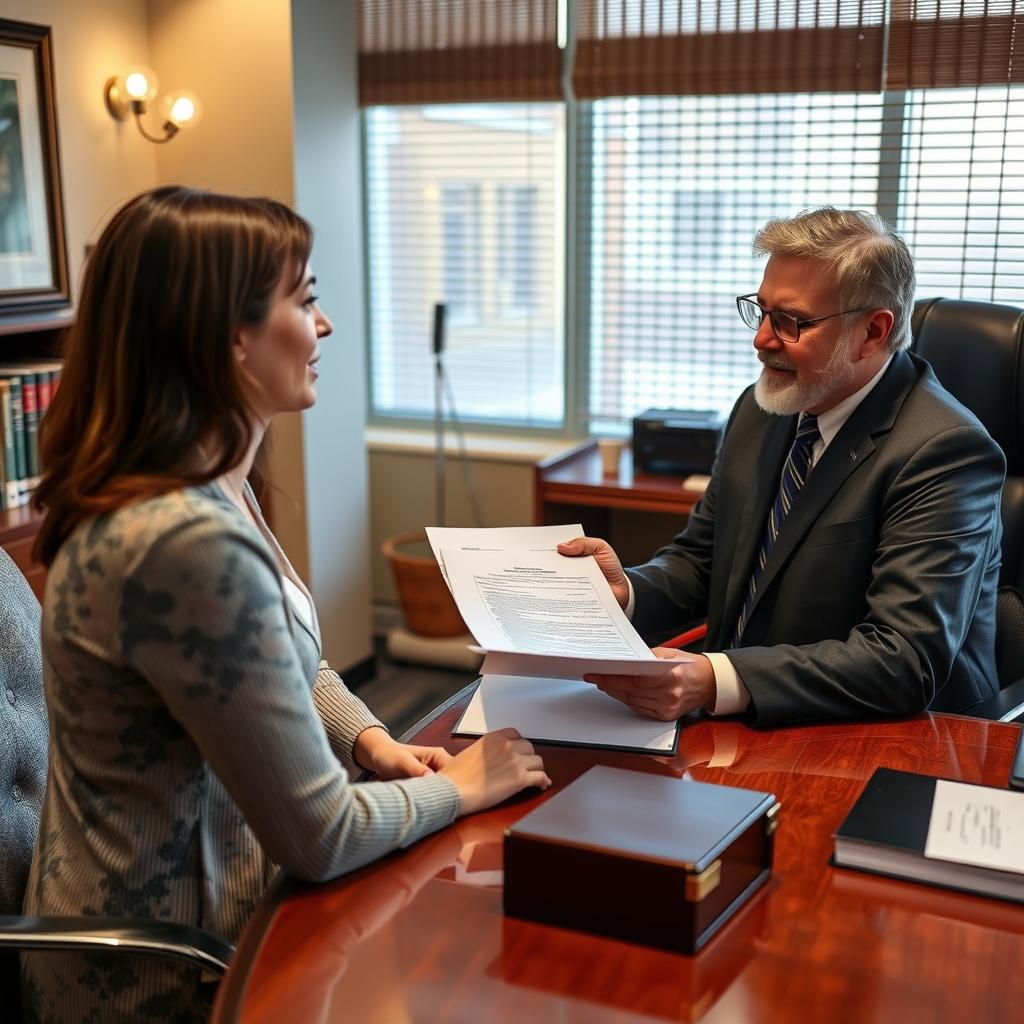
Minor Guardianship Lawyer Fairfax County, VA
When a minor child in Fairfax County, Virginia, requires a court‑appointed guardian, the legal process is governed by Va. Code § 64.2‑2000 et seq. The Fairfax County Circuit Court, located at 4110 Chain Bridge Road, Suite 210, Fairfax, VA 22030, holds authority over guardianship matters arising in the county’s diverse communities—Fairfax, Burke, Centreville, Chantilly, Herndon, Reston, McLean, Vienna, Tysons, Oakton, Springfield, Annandale, Falls Church and beyond. A guardianship proceeding typically arises when a child’s parents are deceased, incapacitated, or otherwise unable to care for the child, compelling a relative or other responsible adult to seek the court’s recognition as the child’s legal guardian. Because the welfare of a child is paramount, the court examines the petitioner’s fitness and the child’s circumstances with care. Mr. Sris and his Of Counsel at Law Offices Of SRIS, P.C. represent petitioners and proposed guardians throughout the Fairfax County Circuit Court’s guardianship docket, guiding families through the filings, the necessary notice to interested parties, and the evidentiary hearing that will determine the appointment. To discuss a minor guardianship matter with an experienced attorney, call (888) 437‑7747. Law Offices Of SRIS, P.C. – Advocacy Without Borders.
What Minor Guardianship Means in Fairfax County
In Virginia, a guardian of a minor is a person appointed by the circuit court to assume the legal responsibilities of a parent when the parent is unable or unavailable to act. Unlike a custody or visitation proceeding in the Juvenile and Domestic Relations District Court, a guardianship under Va. Code § 64.2‑2000 et seq. Bestows broader, more enduring authority over the child’s personal and medical decisions. The Fairfax County Circuit Court may entertain a guardianship petition when the child’s parents are deceased, have abandoned the child, have been found unfit, or have consented to the appointment. Grandparents, aunts, uncles, adult siblings, or family‑friend caregivers who have already been the child’s primary support often initiate the process to obtain the legal standing necessary to enroll the child in school, consent to medical treatment, and manage other fundamental decisions.
The Fairfax County Circuit Court, which sits in the Nineteenth Judicial District, reviews each petition based on the best interests of the child. A guardian ad litem may be appointed to investigate and report to the court, and all interested persons must receive notice and an opportunity to be heard. Because guardianship severs or suspends a parent’s fundamental rights, the court applies heightened scrutiny; the petitioner bears the burden of proving by clear and convincing evidence that the appointment is necessary and in the child’s best interest. Mr. Sris and his Of Counsel have appeared in this court on behalf of petitioners across Fairfax County, including families from Annandale, Oakton, Springfield, and McLean, and they bring a thorough understanding of the procedural and evidentiary demands that judges in the Fairfax Circuit Court expect. Neighboring counties—such as Prince William County and Loudoun County—operate under the same statutory framework, and the firm’s attorneys assist clients in those jurisdictions as well.
How Mr. Sris and His Of Counsel Handle Minor Guardianship Cases
Beginning a minor guardianship case in Fairfax County requires the preparation of a petition that meets the pleading standards of the Virginia Code and the local rules of the Circuit Court. Mr. Sris and his Of Counsel gather the factual background, identify the statutory grounds for appointment, and draft the complaint with the particularity the court requires. The petition must name all interested parties—living parents, the child if over 14, any person with a current court‑ordered relationship to the child—and explain why the proposed guardian is suitable. Once filed, the petitioner must effect service of process or obtain acceptances of service, a step that can become procedurally intricate if a parent lives out of state or cannot be located. The firm’s attorneys coordinate service and, when necessary, request publication in a newspaper of general circulation as permitted by Virginia law.
After service is complete, the Fairfax County Circuit Court schedules a hearing. The petitioner and the proposed guardian—often the same person—must attend, and the presence of the child may be required depending on the child’s age and the judge’s preference. At the hearing, the petitioner presents testimony and documentary evidence supporting the guardianship. A guardian ad litem, if appointed, presents a report and recommendation. The court may question the proposed guardian about the living arrangements, financial stability, and understanding of the responsibilities being assumed. Mr. Sris and his Of Counsel prepare their clients for these inquiries and handle the introduction of evidence so that the court receives a complete and accurate picture of the child’s circumstances. Throughout the process, the legal team works to move the matter forward efficiently while respecting the court’s calendar and the need for thorough judicial review—a timeline that varies with case complexity and the number of contested issues.
About Mr. Sris and His Of Counsel Team
Mr. Sris, Owner and Founder of Law Offices Of SRIS, P.C., established the firm in 1997 and is admitted to practice in Virginia, Maryland, the District of Columbia, New Jersey, and New York. His background as a former prosecutor informs his approach to guardianship litigation, where careful fact‑gathering and persuasive presentation of evidence are essential. Mr. Sris testified before the Virginia House Courts of Justice Committee in support of 2019 HB 635 (chief patron Del. David Bulova), legislation that addressed important procedural issues in family law. He manages a select caseload to remain closely involved in each matter, collaborating with his Of Counsel to ensure sound legal work.
Mr. Sris and his Of Counsel bring over 120 years of combined legal experience, supported by 4,739+ documented firm-wide results. Results may vary. The Of Counsel team includes attorneys with extensive backgrounds in child‑welfare practice and litigation, enabling the firm to address both the procedural demands of a guardianship petition and the sensitive human dimensions of the case. The firm’s Fairfax location at 4008 Williamsburg Court, Fairfax, VA 22032, is available by appointment, and consultations can be requested at (888) 437‑7747.
Frequently Asked Questions
What is a minor guardianship in Virginia?
A minor guardianship is a court‑ordered appointment of a responsible adult to make personal and medical decisions for a child when a parent is deceased, incapacitated, or otherwise unable to fulfill that role. Under Va. Code § 64.2‑2000 et seq., the Circuit Court grants the guardian legal authority that supersedes a parent’s rights for as long as the guardianship remains in effect. The guardian may enroll the child in school, consent to healthcare, and provide day‑to‑day care, but does not automatically receive custody—a separate custody order may be necessary if the child lives with someone other than the guardian. In Fairfax County, the Fairfax County Circuit Court hears these petitions and examines the child’s best interests before issuing an order.
When should someone consider seeking a minor guardianship?
A person should consider seeking a minor guardianship when a child in his or her care needs a legally recognized decision‑maker because the child’s parents are deceased, have abandoned the child, are incapacitated, or have otherwise become unable to provide proper care. Common scenarios include a grandparent caring for a grandchild after the parent’s death or a relative stepping in when a parent is struggling with a severe illness. Without a guardianship order, the caregiver may be unable to enroll the child in school, authorize medical treatment, or obtain public benefits for the child. The petition can also be filed with the consent of the living parent if the parent voluntarily agrees that a guardianship serves the child’s best interests.
How does the minor guardianship process work in Fairfax County?
The process begins with filing a petition in the Fairfax County Circuit Court that names the proposed guardian, identifies the child and any living parents, and states the grounds for the appointment. After filing, the petitioner must serve notice on all interested persons—including the child if over 14 years of age. A guardian ad litem may be appointed to investigate and report to the court. A hearing is then scheduled at which the petitioner presents evidence, and the court determines whether the appointment meets the statutory criteria. If granted, the court issues an order of guardianship, which the guardian may need to register with other agencies to exercise full authority. The timeline varies based on the court’s calendar and whether the matter is contested.
Do I need a lawyer for a minor guardianship case?
While you are not required to have a lawyer to file a guardianship petition, having an experienced attorney is strongly advisable because the process involves detailed pleading requirements, strict rules of service, and an evidentiary hearing in which a parent’s rights may be permanently affected. The Fairfax County Circuit Court will expect compliance with the Virginia Code and local rules, and any procedural error can delay the appointment or result in dismissal. An attorney can gather the necessary documentation, prepare the petition, coordinate service, and present a persuasive case at the hearing. For guidance on a specific situation, reach Mr. Sris and his Of Counsel at (888) 437‑7747.
How long does a minor guardianship last in Virginia?
A minor guardianship generally lasts until the child reaches age 18, unless the court terminates it earlier because the circumstances that justified the guardianship have changed. Either parent or the guardian may petition the court to terminate or modify the guardianship if, for example, a parent’s capacity is restored or the parent demonstrates the ability to resume care. The court will hold a hearing and determine whether ending the guardianship is in the child’s best interest. The guardian is required to file reports with the court on a schedule set by the judge and must notify the court of any significant change in the child’s living situation.
Can a minor guardianship be contested?
Yes, a parent or other interested person may contest a minor guardianship petition by filing a written objection and presenting evidence to the Fairfax County Circuit Court. Common grounds for contesting include assertions that the parent is capable of caring for the child, that the proposed guardian is unsuitable, or that the petition lacks the necessary statutory proof. The objecting party is entitled to notice of the hearing and may cross‑examine witnesses and present his or her own evidence. Because a contest often raises complex evidentiary and procedural questions, both the petitioner and the objector benefit from legal representation. The court will weigh the evidence and decide based on the child’s best interests, applying the clear‑and‑convincing‑evidence standard.
Mr. Sris and his Of Counsel also assist families with related family law matters in Prince William County, Loudoun County, Stafford County, and other nearby jurisdictions. For broader resources, see the firm’s Virginia family law overview.
Additional primary‑source materials: Virginia Code Title 64.2 (Guardianship and Conservatorship), Fairfax County Circuit Court, Virginia’s Judicial System.
Attorney advertising. Prior results do not guarantee a similar outcome. Results may vary. Case results depend on a variety of factors unique to each case. Attorney responsible for this advertising: Mr. Sris.