
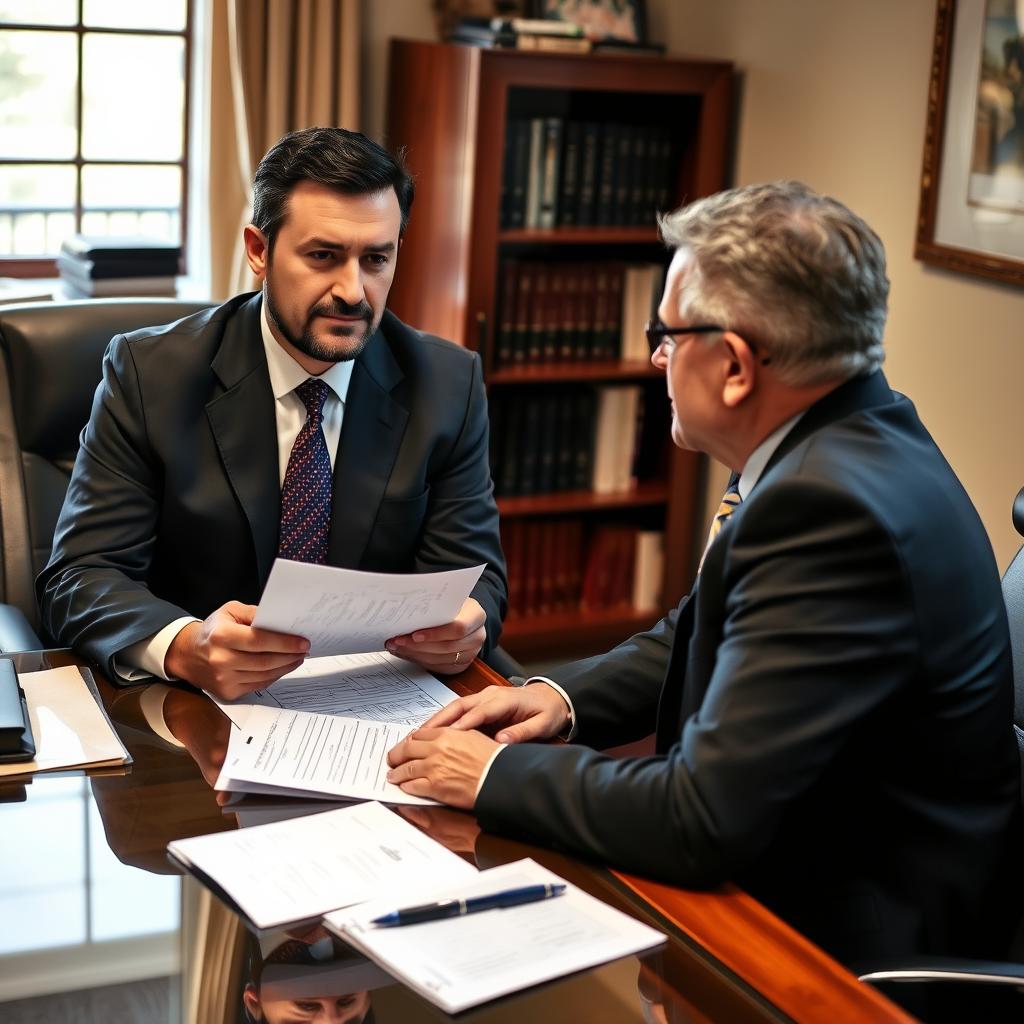
Retirement Account Division Lawyer Falls Church, VA
Dividing retirement accounts during a divorce in Falls Church, Virginia, requires a thorough understanding of equitable distribution and the specific procedures of the Falls Church Circuit Court. Retirement assets—including 401(k)s, pensions, IRAs, and government plans—are often among the most valuable marital property. Under Virginia law, these accounts are classified as marital or separate depending on when contributions were made, and they must be divided fairly but not necessarily equally. Law Offices Of SRIS, P.C. Concentrates on complex family law matters, including the valuation and division of retirement assets. Mr. Sris and his Of Counsel handle matters for clients throughout Falls Church and the Seventeenth Judicial District, focusing on achieving an equitable division that protects your financial future. Reach our firm at (888) 437-7747 to schedule a consultation. Law Offices Of SRIS, P.C. – Advocacy Without Borders.
What Retirement Account Division Means in Falls Church
Virginia is an equitable distribution state, not a community property state. Under Va. Code § 20‑107.3, the Falls Church Circuit Court must classify all property as marital, separate, or hybrid, value it, and then divide marital property equitably after considering 11 statutory factors. Retirement accounts are often hybrid assets: contributions made before marriage are separate property, while contributions made during the marriage and any passive growth on those contributions are marital property subject to division.
All divorce, equitable distribution, and spousal support matters are heard at the Falls Church Circuit Court, located at 300 Park Avenue, Suite 151W, Falls Church, VA 22046. Standalone custody, visitation, and child support issues proceed in the Falls Church Juvenile & Domestic Relations District Court. When retirement accounts are involved, the court frequently requires a Qualified Domestic Relations Order (QDRO) to implement the division—a separate court order that directs the plan administrator how to distribute benefits. Mr. Sris and his Of Counsel work with financial attorneys to prepare the necessary documentation and advocate for a division that reflects each party’s contributions.
For cases filed in the Falls Church Circuit Court, the filing fee for a divorce complaint is approximately $86. Service of process by the sheriff’s department adds roughly $12, while private process servers charge between $50 and $100. A Guardian ad Litem, if needed for custody matters, may cost $500 to $2,500 or more. Mediation, which is available but not mandatory in Virginia, often ranges from $100 to $300 per hour per party. These costs are distinct from attorney fees and are paid directly to the court or the neutral professional.
How Mr. Sris and His Of Counsel Handle Retirement Account Division Cases
Addressing the division of retirement accounts begins with identifying all accounts subject to equitable distribution. Mr. Sris and his Of Counsel obtain the necessary plan documents, account statements, and valuations. The marital share is calculated by subtracting the pre‑marriage balance and any post‑separation contributions from the total value, typically using the coverture formula. The team collaborates with forensic accountants and pension valuation attorneys when complex defined‑benefit plans, military pensions, or executive deferred‑compensation arrangements are involved.
Once the marital share is established, the negotiation phase focuses on reaching a property settlement agreement that addresses the retirement assets together with other marital property. If a settlement is not possible, Mr. Sris and his Of Counsel present the valuation evidence and proposed division to the Falls Church Circuit Court. The court considers factors including the length of the marriage, each spouse’s age and health, their respective contributions to the marriage, and the tax consequences of the proposed division. The final step is the preparation and entry of a QDRO or other implementing order, which must comply with the plan’s rules and the Employee Retirement Income Security Act (ERISA) where applicable.
About Mr. Sris and His Of Counsel Team
Mr. Sris, Owner and Founder of Law Offices Of SRIS, P.C., has practiced family law and civil litigation since 1997. He is a former prosecutor who brings prosecutorial insight to every contested matter. Mr. Sris testified before the Virginia House Courts of Justice Committee in support of 2019 HB 635 (chief patron Del. David Bulova), legislation that revised the QDRO provisions of Va. Code § 20‑107.3(g). He is admitted in Virginia, Maryland, the District of Columbia, New Jersey, and New York.
Mr. Sris and his Of Counsel bring extensive combined legal experience to the division of retirement accounts and other complex financial aspects of divorce. They work as a collaborative team, drawing on the individual strengths of each Of Counsel attorney while keeping Mr. Sris closely involved in every case. The firm serves clients throughout Northern Virginia, including those appearing in the Falls Church courts. Results may vary.
Frequently Asked Questions
How are retirement accounts divided in a Virginia divorce?
Retirement accounts are divided through equitable distribution, which may or may not result in a 50‑50 split. Under Va. Code § 20‑107.3, the Falls Church Circuit Court first determines the marital portion of each account, then applies 11 statutory factors—including the length of the marriage, each spouse’s contributions, and tax implications—to decide what division is fair. A QDRO is typically required to carry out the division for employer‑sponsored plans.
What types of retirement accounts are subject to division?
Any retirement account that accrued value during the marriage is potentially subject to division, including 401(k)s, 403(b)s, IRAs, pensions, and military retired pay. Even accounts that are not divisible by QDRO, such as IRAs, can be divided through a transfer incident to divorce. The key factor is whether contributions or growth occurred during the marriage. Mr. Sris and his Of Counsel trace each account’s history to determine the marital share.
How is the marital share of a retirement account calculated?
The marital share is typically calculated using the coverture formula: the account value at the time of division is multiplied by a fraction, with the numerator being the number of months of plan participation during the marriage and the denominator being the total months of participation. Adjustments may be needed for contributions made before marriage, after separation, or with separate funds. A forensic accountant often assists in preparing the calculation for court presentation.
Do I need a QDRO to divide a 401(k) or pension?
Yes, a Qualified Domestic Relations Order (QDRO) is almost always required to divide employer‑sponsored defined‑contribution and defined‑benefit plans. The QDRO must be approved by the plan administrator and meet the plan’s specific requirements. Mr. Sris and his Of Counsel prepare QDROs that conform to both Virginia law and federal ERISA regulations, working to avoid administrative rejections that can delay the division.
What if one spouse contributed to the retirement account before marriage?
Pre‑marriage contributions and any passive growth on those contributions are generally classified as separate property and are not divided. The burden falls on the spouse claiming separate property to trace the contributions. Account statements, plan records, and expert testimony can establish the separate portion. The marital portion is then limited to contributions and growth during the marriage.
How can I protect my retirement benefits in a Falls Church divorce?
Documenting the source and timing of all contributions is essential. Working with an attorney who can identify and value each account, negotiate a fair settlement, and draft a compliant QDRO protects your interests. Law Offices Of SRIS, P.C. handles retirement‑division matters for clients throughout Falls Church and the Seventeenth Judicial District. For a consultation, reach Mr. Sris and his Of Counsel at (888) 437‑7747.
Explore family law representation in neighboring localities:
Fairfax County Family Law Lawyer |
Fairfax City Family Law Lawyer |
Prince William County Family Law Lawyer |
Manassas City Family Law Lawyer |
Manassas Park Family Law Lawyer
Primary legal sources:
Va. Code § 20‑107.3 – Equitable distribution |
Falls Church Circuit Court |
Virginia Judicial System
Attorney advertising. Prior results do not guarantee a similar outcome. Results may vary.
Case results depend on a variety of factors unique to each case.