
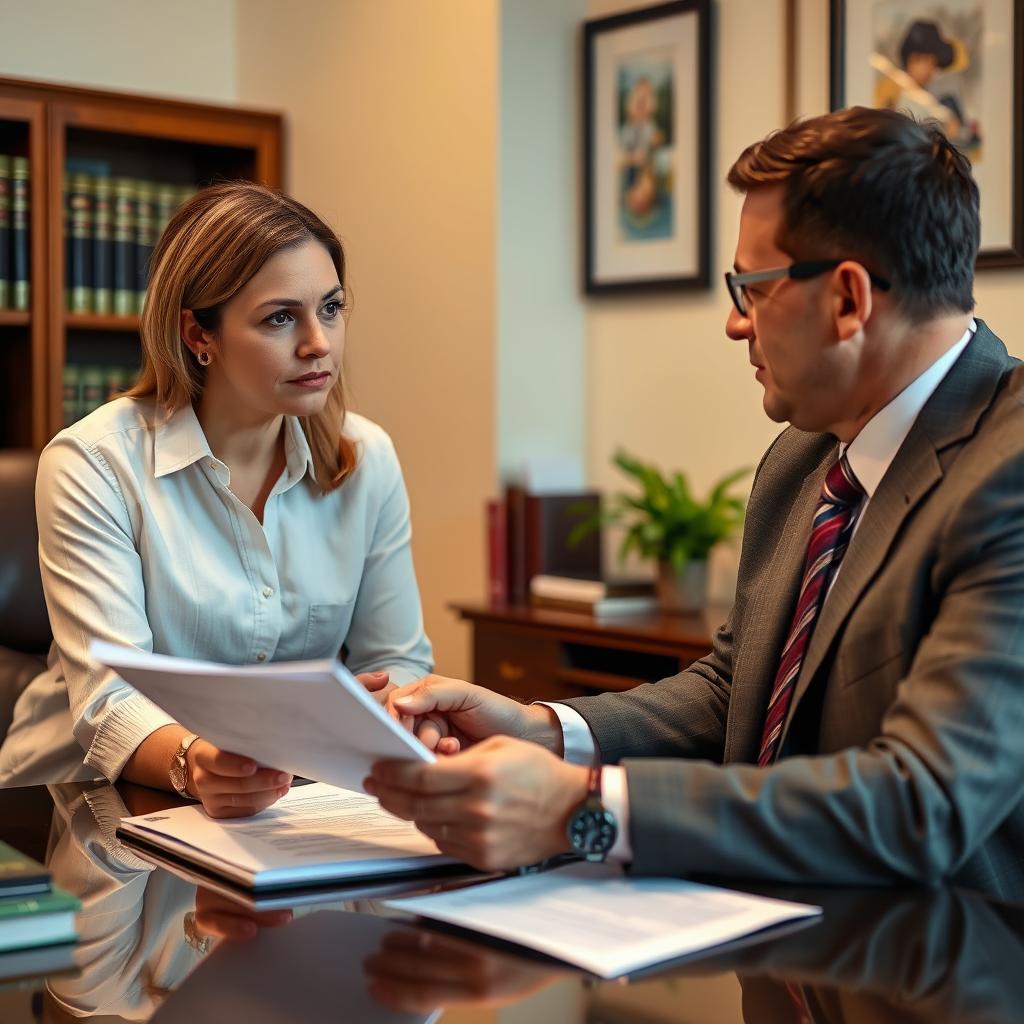
Spousal Support Lawyer Falls Church, VA
When a marriage ends, financial obligations between spouses do not always
dissolve with the relationship. In Falls Church, Virginia, a party may seek
spousal support—often called alimony—to maintain a standard of living or to
receive assistance while becoming self‑supporting. Whether you need to
establish support during a divorce, enforce an existing order, or respond to a
request for modification, the outcome turns on how the court weighs
the statutory factors. Law Offices Of SRIS, P.C., practicing since 1997,
represents clients in spousal‑support proceedings before the Falls Church
Circuit Court and the Juvenile and Domestic Relations District Court. Reach our
location at (888) 437‑7747 to request a consultation.
What Spousal Support Means in Falls Church, Virginia
Spousal support in Virginia is governed by Va. Code § 20‑107.1, which sets
out the factors a court must consider when deciding whether to award support,
how much, and for how long. Unlike child support—which follows formulaic
guidelines—spousal support is determined on a case‑by‑case basis after
evaluating the parties’ financial circumstances, the length of the marriage,
each spouse’s earning capacity, contributions to the family, and the
standard of living established during the marriage.
Virginia courts apply 13 statutory factors when determining spousal
support, as enumerated in Va. Code § 20‑107.1.
Source: Virginia Code
§ 20‑107.1
Reviewed by Mr. Sris, admitted in VA/MD/DC/NJ/NY.
In Falls Church, the Circuit Court handles spousal‑support issues that arise
within a divorce action, while the Juvenile and Domestic Relations District
Court may address support when a divorce is not pending or when the parties seek
temporary, pendente lite relief. The court has broad discretion to craft an
award that is fair under the specific facts of the case. Support can take the
form of periodic payments, a lump sum, or a combination. Depending on the
circumstances, the award may be for a defined duration—such as the time needed to
obtain job training—or, in long‑term marriages where a spouse cannot become
self‑sufficient, it may be indefinite. Our Fairfax location (4008 Williamsburg
Court, Fairfax, VA 22032) serves clients throughout the
Falls Church area and appears regularly in both Falls Church courts.
How Mr. Sris and His Of Counsel Handle Spousal Support Cases
Mr. Sris and his Of Counsel begin with a thorough review of the financial
landscape—income, assets, debts, and the reasonable needs of each party. They
work with clients to prepare detailed income and expense statements, identify
hidden or undervalued resources, and, when necessary, collaborate with forensic
accountants to present a clear picture to the court. Because Virginia law does
not use a fixed formula, effective advocacy depends on how well the facts are
organized and communicated to the judge.
The team negotiates settlement where possible, drafting separation agreements
that include spousal‑support provisions tailored to the parties’ unique
situation. When litigation is unavoidable, Mr. Sris and his Of Counsel present
evidence of need and ability to pay, cross‑examine opposing witnesses, and
make legal arguments grounded in the statutory factors. They also handle
post‑decree matters—modifications when a material change in circumstances
occurs and enforcement actions when a paying spouse fails to comply. Every
case is prepared with attention to the procedural requirements of the Falls
Church courts, including timely filings and proper service.
About Mr. Sris and His Of Counsel Team
Mr. Sris, Owner and Founder of Law Offices Of SRIS, P.C., has concentrated
his practice on family law for nearly three decades. Admitted in Virginia,
Maryland, the District of Columbia, New Jersey, and New York, he brings a
multi‑state perspective to spousal‑support matters. Mr. Sris and his Of Counsel
together bring over 120 years of combined legal experience with 4,739+ documented firm-wide results. Results may vary.
Frequently Asked Questions
What factors does a Falls Church court consider when determining spousal support?
A Falls Church court considers 13 statutory factors under Va. Code § 20‑107.1,
including the duration of the marriage, the earning capacity and reasonable needs of
each party, the standard of living established during the marriage, and the
contributions each spouse made to the family.
Other factors are the age and health of the parties, the grounds for divorce,
and any tax consequences. There is no mathematical formula; the judge weighs
all factors to arrive at a fair award based on the evidence presented.
Can spousal support be modified after a divorce in Virginia?
Yes, a spousal‑support order can be modified if the party seeking
the change proves a material change in circumstances that was not
foreseeable at the time of the original order.
Common examples include a substantial change in income, involuntary job
loss, a serious illness, or the supported spouse’s remarriage. The
petition is heard in the same Falls Church court that issued the
original order. The party requesting the modification must present
evidence of the changed condition.
How long does spousal support last in Virginia?
The duration of spousal support depends on the facts the judge
finds under Va. Code § 20‑107.1; it may be for a defined period—such
as the time necessary to acquire education or training—or it may be
indefinite when a spouse cannot reasonably become self‑supporting.
For short‑term marriages, support is often limited to a rehabilitative
period. In long‑term marriages, particularly when one spouse has
stayed out of the workforce, indefinite support is more common. The
court retains authority to modify or terminate support if circumstances
change.
Do I need a lawyer to seek spousal support in Falls Church?
You are not legally required to hire a lawyer, but the
spousal‑support process involves assembling financial documentation,
presenting evidence of the statutory factors, and navigating court
procedures that can be difficult without representation.
An experienced spousal‑support attorney helps you present a
persuasive case, negotiate a fair separation agreement, and, if
necessary, advocate for you at a hearing. The Falls Church courts
expect compliance with local rules and deadlines, and mistakes can
affect the outcome.
What is the difference between spousal support and alimony?
In Virginia, “spousal support” and “alimony” refer to the same
concept: financial payments from one spouse to the other after
separation or divorce.
The term “spousal support” is used in the Virginia Code, but many
people still call it alimony. The court determines the amount and
duration under the same 13 factors listed in Va. Code § 20‑107.1,
regardless of the label.
How does the court calculate the amount of spousal support?
Virginia courts do not use a mathematical formula for spousal
support; instead, the judge evaluates the 13 statutory factors under
Va. Code § 20‑107.1 to determine a reasonable amount that meets the
recipient’s needs while staying within the payor’s ability to pay.
The analysis begins with detailed financial affidavits that show
each party’s income, expenses, assets, and debts. The judge may also
consider testimony about the marital lifestyle, health, and vocational
history to arrive at a fair figure.
Related Family Law Resources
Fairfax County Family Law ·
Fairfax City Family Law ·
Prince William County Family Law
Virginia Code Title 20 (Family Law) ·
Virginia Courts
Attorney advertising. Prior results do not guarantee a similar outcome.
Results may vary.
Case results depend on a variety of factors unique to each case.